
Escape of water damage claims.
Escape of water occurs when water leaks or bursts from internal plumbing systems, heating systems, or household appliances. We support policyholders with expert assessment, evidence gathering, and insurance claim support to help prove the cause of loss and move claims forward efficiently.
What is an escape of water?
Escape of water refers to water escaping from within the property due to failure of internal systems or appliances, rather than external flooding or weather-related events.
Typical causes include:
- Burst pipes
- Leaking taps or flexi hoses
- Overflow from sinks, baths, or basins
- Appliance failures (washing machines, dishwashers)
- Central heating system leaks
Key feature:
✔ Water originates inside the property
Why correct cause identification matters.
In escape of water insurance claims, how the damage happened is just as important as its appearance. Insurers don’t simply assess the visible water damage; they look closely at the exact source and cause of the escape.
Misidentifying the cause can lead to delays, reduced settlements, or even outright claim rejection. If the root cause is recorded incorrectly, insurers may argue that the damage was gradual, pre-existing, or due to poor maintenance.
At Water Damage Repairs, we focus on evidence-based diagnosis of water damage in the home, using professional inspections and clear documentation to pinpoint exactly where and why the escape occurred. This clarity not only strengthens your insurance claim but also ensures repairs are carried out properly, compliantly, and with long-term protection in mind.
How Escape of Water Claims Are Assessed.
Where required, we help connect you with specialist engineers who can carry out non-invasive testing to help identify the source of the water. This may include salt testing or chlorine analysis to support insurers in distinguishing internal escape of water from external water ingress.
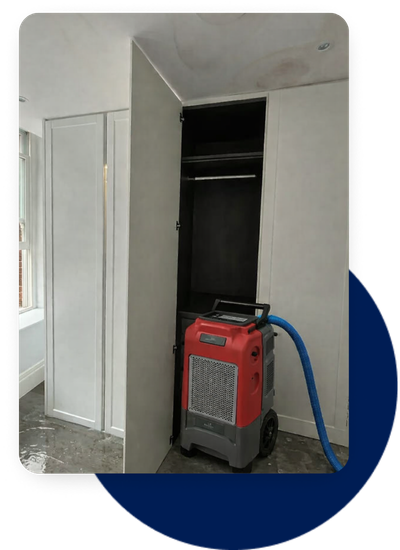
Structural drying water damage mitigation.
After an escape of water incident, effective structural drying is essential to limit further damage and support the recovery of the property. Even once visible water has been removed, residual moisture can remain within walls, floors, and structural materials. To help prevent further damage, we can quickly arrange approved structural drying specialists to attend while the insurance claim is progressing.
Structural drying helps to:
- Reduce the risk of long-term damage to building materials
- Protect floors, walls, and substructures from deterioration
- Support a safe and controlled restoration process
Moisture levels are monitored throughout the drying period to ensure the property is drying correctly and in line with insurer requirements.
Mould remediation after escape of water.
Escape of water incidents can create hidden pockets of moisture, particularly behind walls, beneath flooring, or within cavities. If not addressed promptly, these conditions can increase the risk of mould growth.
Where mould is identified, or there is a heightened risk following water damage, specialist mould remediation may be required. This is assessed as part of the insurance claim.
Remediation focuses on addressing affected areas safely and effectively, helping to protect the property and support a successful return to normal use once the claim progresses.

Case studies.
Every escape of water claim is different, and real outcomes depend on how quickly the issue is identified, documented, and resolved. Here are examples of real-world scenarios where accurate diagnosis, clear evidence, and specialist repair made a measurable difference. These case studies highlight our approach in action and show how the right expertise can turn a complex water damage situation into a controlled, well-managed repair process.
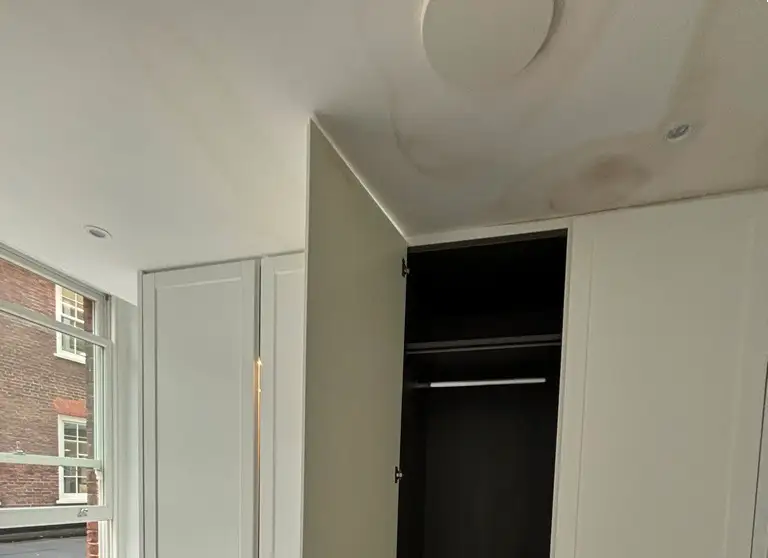
Leak from toilet.
Incident
A high end apartment in Kensington suffered significant water damage after a toilet connector pipe failed overnight. Water escaped for several hours and spread through the ceiling into the open plan living area below.
Read more
By the morning, the ceiling plasterboard was saturated, the hardwood flooring had absorbed moisture, built in cabinetry and skirting boards had begun to swell, and damp staining had appeared on adjoining walls. The homeowner contacted us for help restoring the property and managing the insurance claim.
Client concerns
The homeowner was concerned that a simple surface level repair would leave hidden moisture trapped within the structure. They were particularly worried about the risk of mould growth and long term warping of the timber flooring and joinery. The insurer initially proposed minimal repairs focused on drying and redecorating, however the homeowner felt this would not properly return the property to its pre loss condition.
How we handled the claim
Our team carried out a detailed inspection of the property and prepared a comprehensive schedule of reinstatement works. We recommended removing the affected ceiling plasterboard and lifting the damaged flooring so the structure could be properly dried. Professional drying equipment was installed and we worked closely with the insurer, providing technical evidence and ongoing communication to support a full reinstatement programme.
Outcome
Following continued negotiation, the insurer agreed to the full scope of works. This included removing all damaged finishes, carrying out structural drying and reinstating the flooring, ceilings and joinery. The apartment was fully restored to its pre loss condition and the homeowner gained peace of mind knowing the property had been properly repaired and protected for the future.

Ceiling damage caused by a hidden water leak.

Floor damage caused by a hidden water leak.

Work in progress to ceiling.

Work in progress.

Work completed.
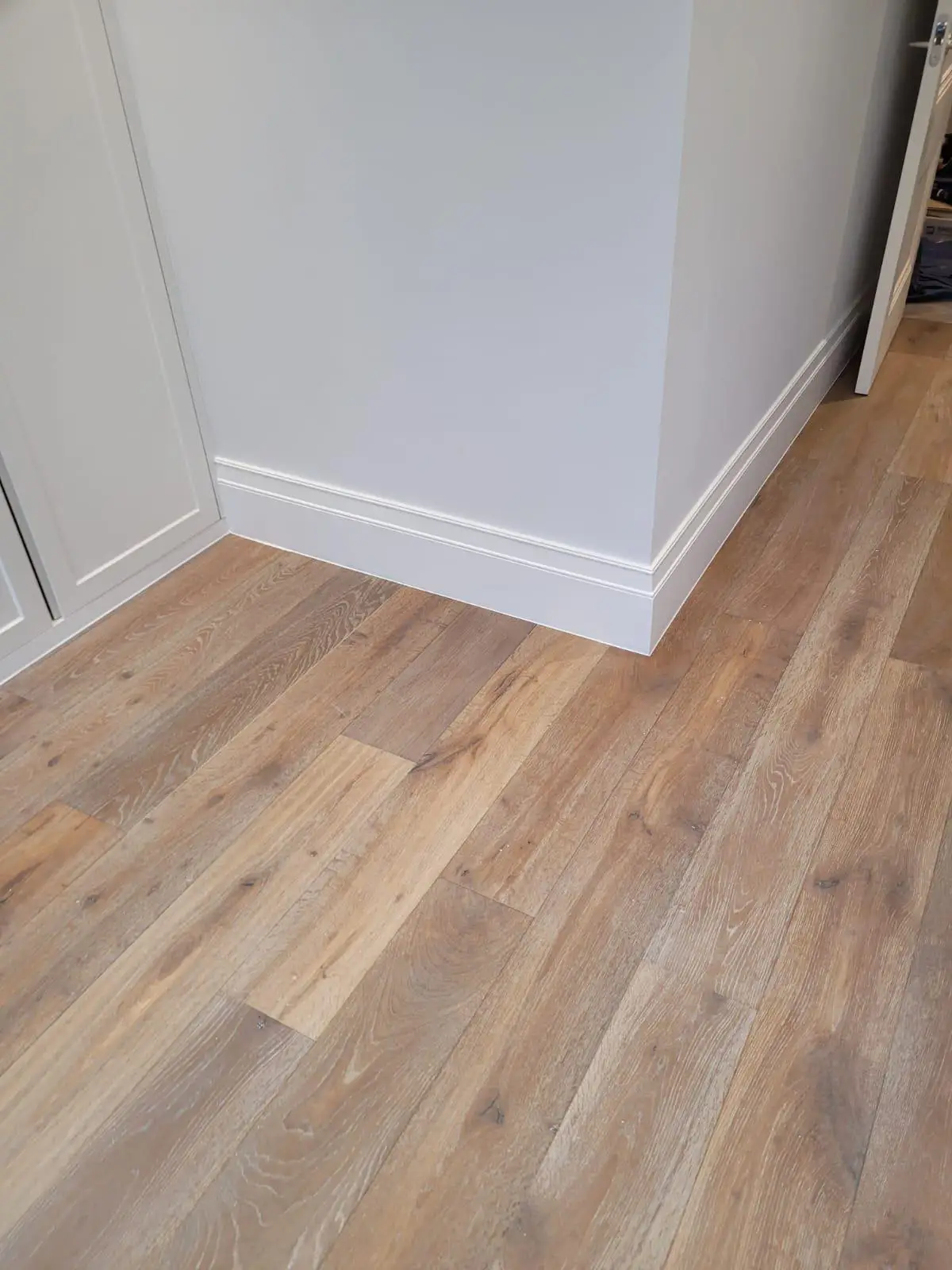
Property restored.
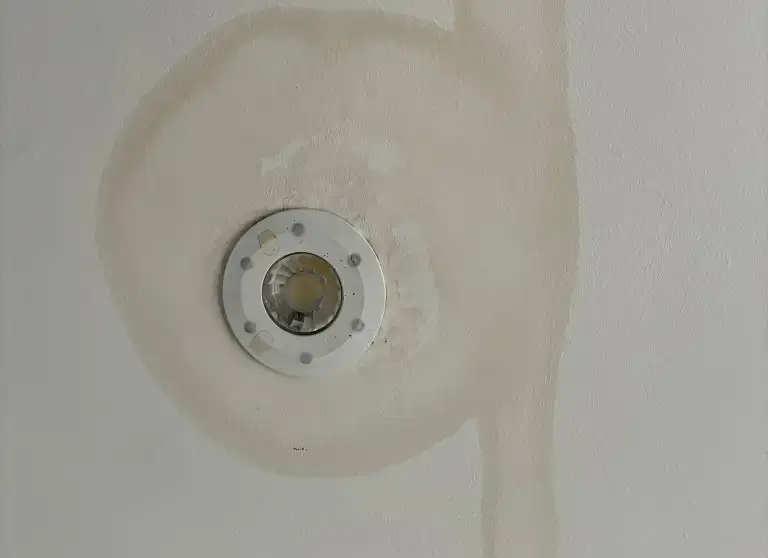
Leak from soil stack.
Incident
The policyholder returned home to discover water dripping from the ceilings and running down the walls. The upstairs neighbour quickly arranged a plumber, who traced the source to a communal soil stack running through the void between the flats.
Read more
Client concerns
The property management company was notified, but after several weeks the leak remained unresolved. What began as minor bedroom damage developed into significant mould growth, making the property unsafe to live in and forcing the policyholder into temporary accommodation.
The insurer offered a £2,000 cash settlement, which did not reflect the scale of the damage or the cost of repairs.
How we handled the claim
We supported the policyholder by challenging the settlement and requesting a full reassessment of the claim. A new loss adjuster was appointed, and a detailed inspection confirmed that the water damage and mould had spread into the building fabric, including ceilings, walls, floors and insulation.
We worked with the insurer to agree the full scope of reinstatement works and secure approval for the necessary repairs and accommodation costs.
Outcome
The insurer approved the complete repair programme and reimbursed the policyholder’s temporary accommodation costs. All works were carried out, and the property was fully restored, allowing the policyholder to return home safely.

Water leak on day 1.

Water damage on ceiling and wall.
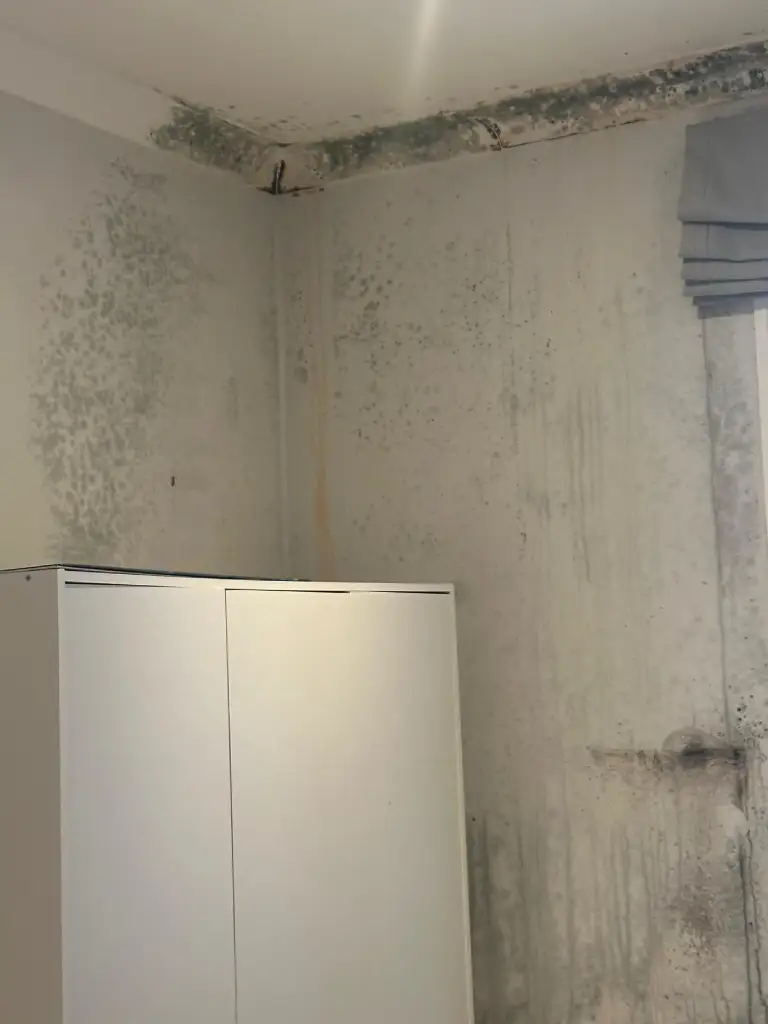
Mould growth on walls.

Mould growth.

Work in progress.

Property restored.
Meet our team.
Behind every successful water damage repair is a team of experienced professionals who understand both the technical and practical challenges of escape of water claims. Our specialists combine hands-on repair expertise with in-depth knowledge of insurance processes, working collaboratively to deliver clear communication, accurate assessments, and high-quality results.


FAQs
Here are answers to some of the questions we’re most often asked about escape of water insurance claims and water damage repairs. If you don’t see what you need, please don’t hesitate to contact us.
What is escape of water excess?
Excess is the amount you’re required to pay towards an insurance claim before your insurer covers the remaining costs. Some block policies apply a higher excess for escape of water claims due to their frequency. It is worth checking the excess amount specified in your insurance policy schedule.
How to detect early signs of water escape in home plumbing?
Early signs of water escape are often subtle. Common indicators include unexplained increases in water bills, reduced water pressure, damp patches on walls or ceilings, peeling paint, musty odours, or mould growth. Acting quickly reduces the extent of damage and demonstrates to your insurer that you acted responsibly.
What are common causes of water leaks in domestic properties?
Domestic water leaks most commonly result from burst or cracked pipes, deteriorated pipe joints, leaks from washing machines or dishwashers, leaking boilers, leaks from taps and leaks from bath / shower traps.
How to detect a hidden water leak behind a wall?
Hidden leaks behind walls often show indirect signs rather than visible water. Common indicators include persistent damp patches, bubbling or flaking paint, warped plasterboard, mould growth, musty smells, or walls that feel colder or soft to the touch. Professional leak detection methods, such as moisture mapping, thermal imaging, or acoustic testing, can accurately locate the source without unnecessary damage to your property.
What our clients say.
We pride ourselves on providing exceptional service, and the feedback from our clients speaks for itself. Here, you can read about the experiences of those who have trusted us with their water damage repairs.


 Customer review by Mike Sohn left on 27 Jan 2026
Position
Customer review by Mike Sohn left on 27 Jan 2026
PositionReally appreciated their 24 hour service. Had a burst pipe in the flat and called late at night. Helpful person took notes and got a call back early next morning with somebody sent out later that morning to come and look. Tom came on sight to survey and was just so clear and helpful explaining all the various options we had and how they could help. He went above and beyond in explaining ...★★★★★
 Customer review by Lin left on 30 Dec 2025
Position
Customer review by Lin left on 30 Dec 2025
PositionThe process from beginning to end went extremely smooth thanks to Steve and his team. Their communication is excellent, proactive and helpful. The job was carried out with quality & speed, the result looks fantastic! Very grateful for their repair work. Thank you Steve and team for being so trustworthy. Appreciate you all! ★★★★★
Customer review by Carole M left on 24 Aug 2025
PositionDefinitely no hard sell with these good people. I didn’t really know who I should be approaching with my problem, but the very knowledgeable gentleman was able to put me in touch with people who would be able to help. The help I got down the line was first class and am now in a position to get my problem resolved. Such a joy receiving such helpful advice from Water Damage Repairs. Thank you.★★★★★
Customer review by Mikhel P left on 27 Oct 2025
PositionThe claim process was made simple and all works was sorted.There were some delays but it all came together at the end. Tom who was the PM was helpful, made the process easier.★★★★★
Customer review by Sylvia K left on 17 Jul 2025
PositionWe were pleasantly surprised by how smoothly everything was managed and executed from start to finish. The team took the time to clearly explain each step of the process and maintained full transparency throughout. Dimitru and his team did an excellent job repairing our water damage with great attention to detail, and impressively fast! We always felt well-informed and in good hands. Highly recommended! ★★★★★
Customer review by Gareth L left on 2 Jul 2025
PositionFor us this was a crisis of life challenging proportions. For Allproperty Claims it was a routine job, no drama at all. We left everything to their specialist team. Job done. ★★★★★
Contact us.
If you’re dealing with water damage or need assistance with an insurance claim, we’re here to help. Our team is ready to provide expert advice and fast, reliable service to get your property back to normal. Reach out to us today, and we’ll guide you through the process every step of the way.
Start your escape of water damage claim with confidence.
Contact us today to take the first step towards a well-managed claim, expert repairs, and peace of mind from the moment you get started.