
Types of damage.
Water damage can take many forms, and the way it’s assessed and claimed depends on how and why it occurred. This page explains the different types of damage we handle, how they’re classified by insurers, and how our specialist support helps ensure each claim is investigated, evidenced, and resolved correctly.
What is considered water damage?
Water damage can occur in many ways, and how the water enters your property often determines whether your insurance policy responds. Below are the most common insured causes of water damage recognised by UK insurers.
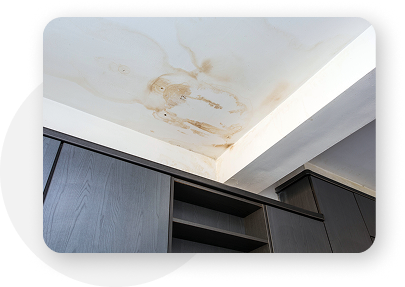
Types of water damage we help with.
Water damage isn’t one-size-fits-all. The cause, source, and behaviour of the water all influence how damage develops and how insurers assess a claim. Below are the main types of water damage we help with, each requiring a specific approach to investigation, evidence, and restoration.
Escape of water.
Water escaping from internal plumbing systems, heating systems, or domestic appliances within the property.
Common examples:
- Burst or leaking pipes
- Leaking taps or flexi hoses
- Overflow from sinks, baths, or basins
- Appliance failures (washing machines, dishwashers)
- Central heating system leaks
Key feature:
✔ Water originates inside the property from plumbing or appliances.
Storm damage.
Water damage caused directly by a storm event, where storm conditions allow water to enter the property.
Common examples:
- Wind-driven rain entering after roof damage
- Broken or displaced tiles following high winds
- Hail or storm debris causing openings in the building envelope
Key feature:
✔ Water enters from above and is linked to storm activity, often requiring storm damage restoration.
Flood.
Water inundation from natural bodies of water or water flowing across normally dry land.
Common examples:
- Overflow of rivers, creeks, dams, or lakes
- Surface water flooding after prolonged or intense rainfall
Key feature:
✔ Water rises from the ground or moves horizontally across land, often requiring flood damage restoration.
Sewerage back-up / overflow.
Contaminated water or sewage backing up into the property due to drainage failure.
Common examples:
- Blocked sewer lines
- Failure of municipal sewer systems
- Septic system overflow
Key feature:
✔ Contaminated water flows back into the property.
Overflow of water from external drains or gutters.
Sudden external water overflow entering the property due to drainage or gutter failure.
Common examples:
- Blocked stormwater drains
- Gutters or downpipes overwhelmed during heavy rain
Key feature:
✔ Water overflows externally and enters the building unexpectedly.
Water used for fire-fighting.
Water damage resulting from fire suppression efforts.
Common examples:
- Fire sprinkler system activation
- Fire brigade hoses
- Firefighting operations causing secondary water damage
Key feature:
✔ Water damage occurs as a direct result of fire response, not plumbing failure.
Why identifying the cause matters.
Correctly identifying the cause is critical to effective water mitigation. Different causes are treated differently by insurers, and misclassification can delay or invalidate a water damage insurance claim. Independent assessment and clear evidence can make a significant difference to claim outcomes.
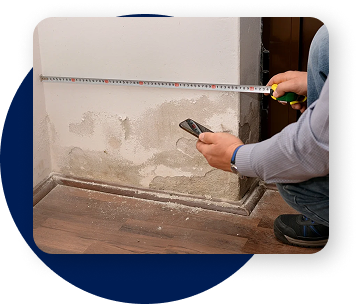
Meet our team.
Our experienced team combines specialist knowledge in water damage assessment, insurance claims support, and coordinated restoration to guide you through every stage of your claim with clarity and confidence.


FAQs
Below you’ll find answers to common questions about the different types of water damage, how insurers assess them, and how we support you throughout the claims and restoration process.
What types of water damage insurance claims do you handle?
We support a wide range of water-related insurance claims, including escape of water, flood damage, storm damage, sewerage back-up and overflow, drain overflow, and damage caused by water used for firefighting. Each claim type is handled with specialist assessment, accurate cause identification, and coordinated restoration.
How do insurers decide which type of water damage claim applies?
Insurers typically base their decision on the cause and source of the water damage, not just what the damage looks like. For example, water entering from outside the property may be treated as flood or storm damage, while leaks from internal plumbing are usually classed as escape of water. Accurate investigation and clear evidence are essential to ensure the damage is categorised correctly and assessed under the right policy cover.
What happens if more than one type of water damage is involved?
Some incidents involve multiple factors, such as heavy rainfall combined with a blocked drain or an internal leak worsened by storm conditions. In these cases, insurers closely examine the primary cause of damage. We assess all contributing factors, document the findings clearly, and help present the claim in a way that reflects how cover applies under your policy.
Why does the cause of water damage matter more than the visible damage?
While visible damage shows the impact, insurers rely on the cause to determine policy response, excess levels, and exclusions. Two properties with identical damage can receive very different outcomes if the causes differ. Correct cause identification protects your position and helps prevent claims being delayed, reduced, or declined.
How do you investigate and evidence different types of water damage claims?
We use professional inspections and, where required, specialist non-intrusive techniques such as moisture mapping, thermal imaging, acoustic testing, and tracer gas detection. These methods allow us to pinpoint the source of water, confirm how the damage occurred, and provide insurers with clear, credible evidence.
What our clients say.
We pride ourselves on providing exceptional service, and the feedback from our clients speaks for itself. Here, you can read about the experiences of those who have trusted us with their water damage repairs.


 Customer review by Mike Sohn left on 27 Jan 2026
Position
Customer review by Mike Sohn left on 27 Jan 2026
PositionReally appreciated their 24 hour service. Had a burst pipe in the flat and called late at night. Helpful person took notes and got a call back early next morning with somebody sent out later that morning to come and look. Tom came on sight to survey and was just so clear and helpful explaining all the various options we had and how they could help. He went above and beyond in explaining ...★★★★★
 Customer review by Lin left on 30 Dec 2025
Position
Customer review by Lin left on 30 Dec 2025
PositionThe process from beginning to end went extremely smooth thanks to Steve and his team. Their communication is excellent, proactive and helpful. The job was carried out with quality & speed, the result looks fantastic! Very grateful for their repair work. Thank you Steve and team for being so trustworthy. Appreciate you all! ★★★★★
Customer review by Carole M left on 24 Aug 2025
PositionDefinitely no hard sell with these good people. I didn’t really know who I should be approaching with my problem, but the very knowledgeable gentleman was able to put me in touch with people who would be able to help. The help I got down the line was first class and am now in a position to get my problem resolved. Such a joy receiving such helpful advice from Water Damage Repairs. Thank you.★★★★★
Customer review by Mikhel P left on 27 Oct 2025
PositionThe claim process was made simple and all works was sorted.There were some delays but it all came together at the end. Tom who was the PM was helpful, made the process easier.★★★★★
Customer review by Sylvia K left on 17 Jul 2025
PositionWe were pleasantly surprised by how smoothly everything was managed and executed from start to finish. The team took the time to clearly explain each step of the process and maintained full transparency throughout. Dimitru and his team did an excellent job repairing our water damage with great attention to detail, and impressively fast! We always felt well-informed and in good hands. Highly recommended! ★★★★★
Customer review by Gareth L left on 2 Jul 2025
PositionFor us this was a crisis of life challenging proportions. For Allproperty Claims it was a routine job, no drama at all. We left everything to their specialist team. Job done. ★★★★★
Start your water damage claim with confidence.
Contact our specialists today for expert assessment, clear insurance guidance, and coordinated restoration that protects your property and your claim from day one.