
Structural drying services.
Leaks and floods leave moisture trapped inside walls, floors and ceilings. We provide accredited drying technicians who carry out professional structural drying to remove excess moisture, prevent mould growth, and prepare your property for onward reinstatement works once this is approved by your insurer. Structural drying is one stage of how we repair water damage, working from the initial moisture survey through to full reinstatement. Our water damage restoration service is coordinated as part of your insurance claim to ensure everything runs smoothly for you.
What is structural drying?
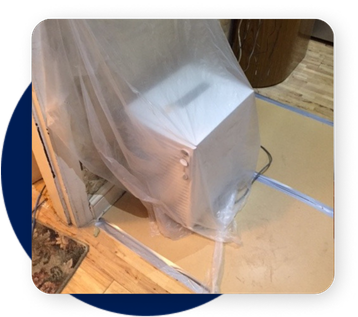
Structural drying (Applied Structural Drying / ASD) is the professional process used to remove moisture from the structure of a building after water damage.
It combines specialist equipment, moisture monitoring and controlled environmental conditions to dry materials safely and efficiently while reducing unnecessary strip-out.
The goal is simple: dry the structure properly and prove it with evidence.
Why structural drying matters.
Without professional drying, properties can suffer as excess moisture can quickly seep into walls, floors and ceilings. Without timely structural drying, it can cause:
- Trapped moisture inside walls, floors and ceilings weakening building structure and damaging finishes
- Mould growth – the NHS advises that damp and mould can affect respiratory health, particularly for children, older adults and those with allergies or asthma
- Poor air quality and musty odours
- Repairs end up costing more if drying is not properly carried out
Structural drying limits long-term damage and ensures the property is properly stabilised before reinstatement work begins.
Our structural drying process.
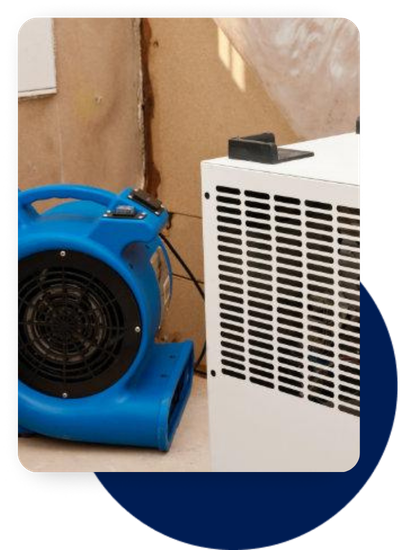
Professional drying follows a structured, monitored approach carried out by specialist drying contractors accredited by organisations such as the British Damage Management Association (BDMA) and the Institute of Inspection, Cleaning and Restoration Certification (IICRC). Advanced equipment, ongoing monitoring and insurer-ready documentation help ensure the property is fully dried before repairs begin.
Moisture survey.
We assess affected materials and identify where moisture is trapped, including walls, floors and subfloors where accessible. This defines the drying zone and ensures drying is targeted and efficient from the start.
Water extraction.
Standing and surface water is removed quickly to prevent further absorption into building materials and stabilise the environment before drying begins. Early extraction helps reduce damage and improves the overall drying timeline.
Controlled drying.
Specialist drying equipment is installed and the environment carefully controlled using professional dehumidifiers, air movers and targeted heat drying where appropriate.
Monitoring & report.
Moisture levels are monitored throughout the process and equipment is adjusted as conditions change. Drying is only complete once readings confirm acceptable levels and documentation supports repairs and insurance.
Salt testing to confirm the true cause of damp.
Water from the mains supply leaves behind chloride salts, which indicate an escape of water and support an insured claim. Nitrate salts, on the other hand, are associated with genuine rising damp. This straightforward test helps ensure decisions are based on evidence rather than assumption.
Did you know?
Insurers often attribute damp patches to rising damp, which is typically not covered by insurance. However, many cases are actually caused by concealed plumbing leaks. Salt testing offers a scientific way to distinguish between the two.
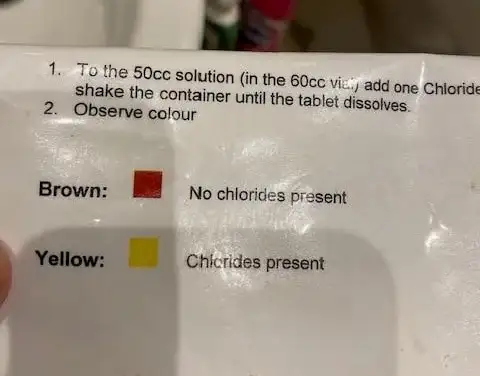
Method used to test for chlorides

Plaster sample collected from the wall

Chlorides present, nitrates absent – confirming a plumbing leak.
The four principles of structural drying.
Professional structural drying relies on four key principles working together.
1. Water removal.
Removing standing and surface water:
- Reduces moisture trapped in materials
- Speeds up the drying process
- Stabilises the environment before equipment is installed
Early extraction significantly improves drying success.
2. Air movement and safe airflow.
Air circulation accelerates evaporation and releases moisture from wet materials.
Airflow must be controlled carefully. When required, containment or filtration measures are used so drying does not spread contamination such as mould.
3. Dehumidification.
As moisture evaporates, it must be removed from the air.
Without dehumidification:
- Moisture remains trapped in materials
- Humidity stays high
- Mould risk increases
Professional dehumidifiers remove excess water vapour so materials dry fully – not just on the surface.
4. Temperature control.
Temperature affects evaporation and equipment performance.
Maintaining the correct balance helps:
- Accelerate evaporation
- Improve drying efficiency
- Prevent delays in the drying process
Controlled environments keep drying within optimal conditions.
Signs you may need structural drying.
When water damage forms part of an insurance claim, the drying stage must be completed in a way insurers understand and approve before repairs begin. This includes:
- Evidence-based moisture readings
- Documented progress and completion
- A clear sequence: stop the source → dry → repair
Drying first helps prevent repairs being completed over damp materials, reducing the risk of repeat damage, mould issues and costly rework.
Insurance ready documentation.
We provide the evidence and reporting needed to support insurance discussions and help ensure repairs begin at the right time. If you instruct us, your claim will be coordinated through our FCA-regulated firm.
Meet our team.
Our experienced team combines specialist knowledge in water damage assessment, insurance claims support, and coordinated restoration to guide you through every stage of your claim with clarity and confidence.


FAQs
Below you’ll find answers to common questions about structural drying, how insurers assess them, and how we support you throughout the claims and restoration process.
How long does structural drying take?
It depends on the amount of water, affected materials, airflow, temperature, and how quickly drying starts. Some cases take days, others longer. The only honest answer is: until readings prove it’s dry.
How do I know if water damage is structural?
Look for warping, sagging, cracking, sticking doors, rotten timber, or recurring damp. If moisture is inside the building fabric, drying should be confirmed before replacing finishes.
Can I just open windows and use a household dehumidifier?
You can try and you’ll usually waste time. Household units rarely control humidity and airflow properly across affected materials and voids. Professional drying is targeted, monitored, and documented.
Will structural drying help prevent mould?
It significantly reduces the risk because mould thrives in damp conditions. Drying fast, controlling humidity, and proving the result is the right approach.
Will insurance cover structural drying?
If the cause is an insured peril (like an escape of water from a pipe), drying is often part of the claim – but every policy differs. Documentation and correct sequencing help avoid disputes.
What our clients say.
We pride ourselves on providing exceptional service, and the feedback from our clients speaks for itself. Here, you can read about the experiences of those who have trusted us with their water damage restrations.


 Customer review by Mike Sohn left on 27 Jan 2026
Position
Customer review by Mike Sohn left on 27 Jan 2026
PositionReally appreciated their 24 hour service. Had a burst pipe in the flat and called late at night. Helpful person took notes and got a call back early next morning with somebody sent out later that morning to come and look. Tom came on sight to survey and was just so clear and helpful explaining all the various options we had and how they could help. He went above and beyond in explaining ...★★★★★
 Customer review by Lin left on 30 Dec 2025
Position
Customer review by Lin left on 30 Dec 2025
PositionThe process from beginning to end went extremely smooth thanks to Steve and his team. Their communication is excellent, proactive and helpful. The job was carried out with quality & speed, the result looks fantastic! Very grateful for their repair work. Thank you Steve and team for being so trustworthy. Appreciate you all! ★★★★★
Customer review by Carole M left on 24 Aug 2025
PositionDefinitely no hard sell with these good people. I didn’t really know who I should be approaching with my problem, but the very knowledgeable gentleman was able to put me in touch with people who would be able to help. The help I got down the line was first class and am now in a position to get my problem resolved. Such a joy receiving such helpful advice from Water Damage Repairs. Thank you.★★★★★
Customer review by Mikhel P left on 27 Oct 2025
PositionThe claim process was made simple and all works was sorted.There were some delays but it all came together at the end. Tom who was the PM was helpful, made the process easier.★★★★★
Customer review by Sylvia K left on 17 Jul 2025
PositionWe were pleasantly surprised by how smoothly everything was managed and executed from start to finish. The team took the time to clearly explain each step of the process and maintained full transparency throughout. Dimitru and his team did an excellent job repairing our water damage with great attention to detail, and impressively fast! We always felt well-informed and in good hands. Highly recommended! ★★★★★
Customer review by Gareth L left on 2 Jul 2025
PositionFor us this was a crisis of life challenging proportions. For Allproperty Claims it was a routine job, no drama at all. We left everything to their specialist team. Job done. ★★★★★
Book your structural drying assessment.
If you’ve experienced a leak, burst pipe or flood, the next step is to have the property assessed and dried correctly before repairs begin.