

Flooding is one of the most disruptive events a business can face, leaving not only a trail of water damage but also lasting effects on operations, staff morale, and customer trust. For business owners in the Midlands, the risk of flooding is far from hypothetical.
From the River Trent’s floodplains in Nottinghamshire to parts of Birmingham and the Severn Valley, many commercial areas remain vulnerable to sudden or prolonged flood events. The need for professional flood damage restoration has never been more pressing, particularly as climate change increases the frequency of heavy rainfall across the UK.
This guide explores how flood damage occurs, what flood damage cleanup involves, how water damage repairs are carried out, and, most importantly, how Midlands businesses can protect themselves against future risks.
Understanding How Flood Damage Happens
Flood damage can occur in several ways, often catching businesses unprepared. Natural flooding from rivers, heavy rainfall overwhelming drainage systems, or even burst water mains can quickly inundate commercial properties. In the Midlands, where older buildings and Victorian drainage networks are still in use, the risks are compounded. A single intense storm can overwhelm gullies and cause water to back up into warehouses, offices, and retail premises.
Beyond natural causes, structural issues such as blocked gutters or poor maintenance can worsen flood damage. Water seeping in through weak foundations or broken seals around doors and windows can cause significant damage to stock, equipment, and furnishings. Once water enters a building, it can spread rapidly, damaging walls, flooring, electrical systems, and any items stored at ground level.
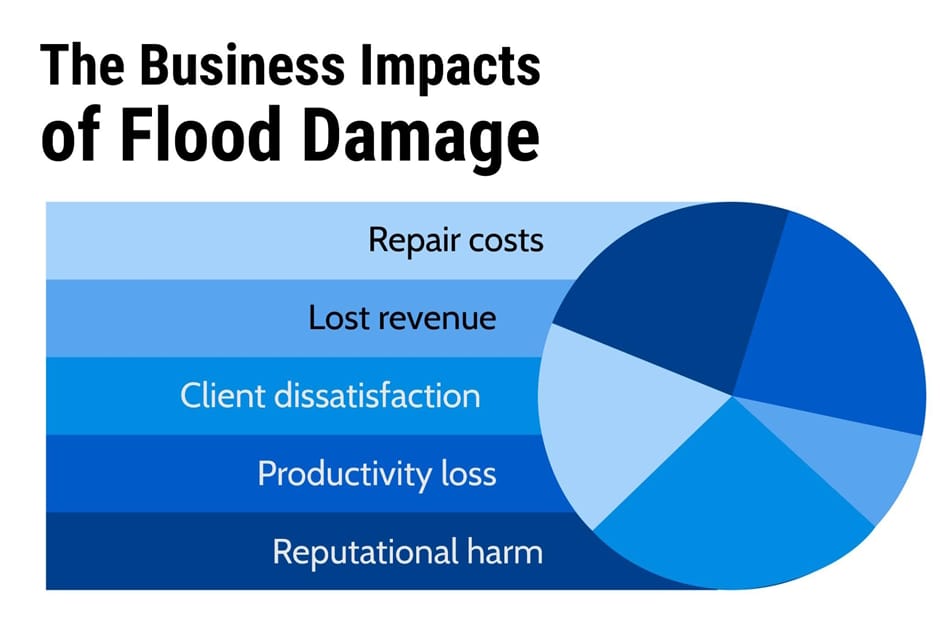
The financial consequences of water damage can be severe. For small and medium-sized businesses in particular, the downtime caused by a flood can jeopardise long-term survival.
The Importance of Immediate Action
When a flood occurs, time is of the essence. Standing water not only ruins property but also creates an ideal environment for mould, bacteria, and long-term structural deterioration. Within the first 24 to 48 hours, water can penetrate deeply into porous materials such as plasterboard, wood, and carpets, making flood damage cleanup far more complex.
Professional flood damage restoration companies like Water Damage Repairs understand the urgency and use advanced extraction and drying equipment to mitigate the spread of water damage. By acting quickly, businesses can reduce repair costs, prevent health risks, and speed up the return to normal operations. Delaying action can also complicate insurance claims. Many insurers require evidence that business owners have taken reasonable steps to minimise further damage. Partnering with a specialist water damage repair provider ensures that proper documentation and professional assessments are carried out, strengthening the claim process.
What Flood Damage Cleanup Involves
Flood damage cleanup is not simply about removing visible water. It is a comprehensive process designed to restore a building to safe and usable condition. The first stage involves assessing the scale of the flood damage and identifying safety hazards, such as contaminated water or compromised electrical systems.
Water extraction is the next step, using industrial pumps and vacuums to remove standing water quickly. Once the bulk of the water has been cleared, drying and dehumidification equipment is deployed to target moisture hidden within walls, flooring, and structural cavities. This stage is crucial, as undetected damp can lead to rot, corrosion, and mould growth, which pose both health and structural risks.
Cleaning and sanitising follow, particularly where floodwaters have been contaminated with sewage or chemicals. Professional flood damage restoration includes the use of antimicrobial treatments to remove harmful bacteria and odours.
Finally, content restoration and repair work are undertaken. This can involve salvaging office furniture, electronics, or stock where possible, or carrying out replacements where necessary. Plastering, painting, flooring repairs, and electrical rewiring may also be needed to bring the premises back to full functionality.
Professional Water Damage Repairs and Insurance Claims
One of the most daunting aspects of flood recovery for business owners is dealing with insurers. Policies vary widely, and without specialist guidance, claims can be delayed or underpaid. Water Damage Repairs offers a unique service in this regard, not only handling the practical side of flood damage restoration but also assisting with insurance claims from start to finish.
Experienced surveyors and claims managers liaise directly with insurers, providing detailed reports, photographs, and cost estimates to ensure that businesses receive fair settlements. For Midlands companies unfamiliar with the complexities of insurance processes, this support can make a significant difference. It allows owners to focus on their staff and customers while knowing the restoration is being handled professionally.
The Specific Challenges for Midlands Businesses
The Midlands presents unique risks when it comes to flood damage. Areas such as Worcester, Leicester, and Derby are particularly prone to river flooding, while urban centres like Birmingham face issues with surface water flooding due to high levels of concrete and limited green drainage spaces.
Midlands businesses also face supply chain challenges when flood damage strikes. Central to the UK’s logistics network, the region’s warehouses, distribution hubs, and retail spaces are critical to operations across the country. A single flooded warehouse in Coventry or Derby can have knock-on effects for partners and clients nationwide.
Moreover, many Midlands business parks and industrial estates are located on low-lying land, chosen historically for transport convenience but now increasingly vulnerable to flooding. Understanding these risks highlights why proactive flood damage cleanup and water damage repairs are vital investments, not optional extras.
Preventing Future Flood Damage
Flood damage restoration is only one side of the equation. Preventing repeat incidents is equally important. Businesses can take several practical measures to reduce future risk, from improving building maintenance to investing in flood resilience features.
Installing flood barriers and airbrick covers can help protect entrances and ventilation points. Regularly clearing gutters, drains, and downpipes ensures rainwater flows away from the property instead of pooling. For businesses in high-risk zones, raising electrical sockets, moving stock off the ground, and storing vital IT equipment above flood level can help minimise potential losses.
Professional assessments are also invaluable. Surveys can be used to identify weaknesses in commercial properties and recommend improvements tailored to specific risks. By understanding the vulnerabilities of their premises, business owners in the Midlands can make informed decisions about upgrades and protective investments.
Another key preventative measure is reviewing insurance policies. Many businesses only discover after a flood that they lack sufficient cover for loss of earnings or damage to certain assets. Regular policy reviews, supported by restoration experts, help ensure the right level of protection is in place.
Supporting Staff and Customers During Recovery
Flood damage not only affects buildings and equipment. It also impacts the people connected to a business. Staff may be displaced from their workplace, while customers may lose access to services or products. Effective flood damage restoration, therefore, includes a people-centred approach.
Clear communication is essential. Keeping staff informed about restoration timelines and alternative working arrangements helps maintain morale and productivity. Similarly, updating customers through emails, social media, or signage reassures them that the business is committed to resuming operations as soon as possible.
Health and safety must also be prioritised. After a flood, buildings can harbour mould spores, bacteria, or unstable structures. Ensuring that only trained professionals carry out water damage repairs protects both employees and customers from unnecessary risks.
Why Professional Expertise Matters
Attempting to handle flood damage cleanup without specialist help can be risky. While it may seem cost-effective to tackle the problem internally, DIY methods rarely address the full extent of water damage. Inadequate drying, for example, can leave behind hidden damp patches that later develop into structural issues or health hazards.
Professional flood damage restoration companies bring not only expertise but also industrial-grade equipment that simply is not available to most businesses. From thermal imaging cameras that detect hidden moisture to high-powered dehumidifiers that dry large spaces efficiently, the tools of the trade make a decisive difference in both speed and effectiveness.
For Midlands business owners already under pressure to manage operations, staff, and customer relationships, outsourcing restoration work ensures that recovery is completed quickly and to the highest standard.
Restoring and Safeguarding Your Business
Flood damage is a growing concern for businesses across the Midlands, but with the right response, recovery is possible. Professional flood damage restoration goes beyond cleaning up water; it safeguards your premises, your people, and your reputation. By acting quickly, partnering with experienced water damage repair specialists, and investing in preventative measures, businesses can turn a disruptive event into an opportunity to strengthen resilience.
At Water Damage Repairs, we specialise in helping Midlands businesses recover from floods and manage insurance claims. If your business has been affected by water damage or if you want to protect your premises against the risks of flooding, get in touch with our team today to discuss how we can support your recovery and safeguard your business.